

Project Details
Geography: Benin
Client: Tractebel (as subcontractors) & Ministère de L’Energie, de L’Eau et des Mines (Benin)
Dates: August 2023 – January 2024
Technology: Hydropower
Project Description
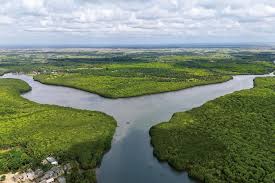
To maximise the benefits of the project and the return on the associated public investment, the Beninese government has opted for a multi-purpose project. This combines a hydroelectric power plant with an irrigation and agricultural development programme fed by the dam’s reservoir, both designed as part of public-private partnership (PPP) arrangements. PIA was tasked with assessing the overall socio-economic impact of the project on Beninese society. This assessment aims to quantify both the direct and indirect impacts of this innovative arrangement. An approach based on the net present value of socio-economic flows was chosen to provide a comprehensive and holistic view of the benefits and costs, comparing comparable indicators:
– The intrinsic financial profitability of both components (electricity generation and agricultural production), depending on the financing mechanism chosen, assessed using a dedicated three-part model.
– The impact on Benin’s energy production and associated costs, through a projection of national energy dispatching over the project’s lifetime, taking into account demand, planned assets, and a counterfactual and scenario analysis.
– An analysis of the project’s fiscal impact.
– An assessment of macroeconomic impacts, including:
• Carbon footprint;
• Trade balance, thanks to increased agricultural and electricity production (Benin is currently a net energy importer);
• Economic growth, assessed using the multiplier method;
• Direct and indirect impact on employment.
In addition, the project also analysed and quantified the impacts of the creation of secondary assets such as the implementation of a complementary floating solar programme and the development of fish farming activities.
Key Takeaways
In an electric power system like Benin’s, which remains heavily reliant on thermal plants and energy imports, the integration of hydroelectric assets provides a critical opportunity to enhance local energy production and gain greater control over variable generation costs. This reduces the system’s exposure to energy and fuel import price fluctuations. Furthermore, the multipurpose nature of hydroelectric projects significantly amplifies socio-economic benefits, enabling the maximization of both direct and indirect advantages of the assets.
Our Building Blocks

- Financial analysis
- PPP structuration
- sensitivity analysis
- economic dispatching model
- asset integration,
- macroeconomic analysis
 Paris Infrastructure Advisory