

Project Details
Geography: Guinea
Client: The World Bank
Dates: June 2024 – July 2024
Technology: Geothermal electricity plant
Project Description
The Guinean government, through its regulatory agency and with the support of the World Bank, has undertaken studies to improve the efficiency and stability of the electric sector, focusing on tariffs and regulation. From 2021 to 2023, with the assistance of Paris Infrastructure Advisory, a new tariff regulation methodology was developed, supported by a new modeling tool to structure the required revenue for the electric operator.
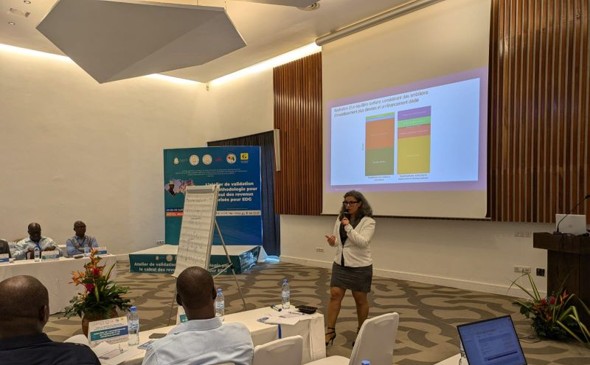
Following this consultancy, the client has requested support for organizing a validation workshop for this methodology with all national stakeholders to legally implement it and assess its implication on tariff evolution and sector subsidies.
The mission aimed to facilitate the validation of the methodology through a series of workshops and technical discussions in Conakry. Specifically, it involved conducting a plenary presentation workshop and an initial roundtable validation session, providing capacity building for the modeling tool, holding technical discussions with relevant stakeholders, and facilitating a final roundtable validation session.
Key Takeaways
Efficient arbitrage in the usual triptych between operator revenue, tariffs, and sector subsidies is essential for a sustainable energy sector. Multiple scenarios and projections with varied settings regarding these parameters allow for an exploration of how this distribution impacts public finances (via subsidies), consumers (through tariff increases), or operators (via revenue reductions). This analysis supports public decision-makers in selecting the optimal configuration, tailored to local challenges and aligned with socio-economic strategic priorities and political choices
Our Building Blocks

- Allowed Revenue Definition
- Stakeholders Engagement
- Capacity Building
 Paris Infrastructure Advisory